 English ▾
 Nederlands
 English (US)
 Deutsch
 Italiano
 Português
 Español
 Français
An emergency department is the part of a hospital where the gap between a well-resourced health system and a stretched one is most visible. Everything arrives at once, undifferentiated and unbooked, and the department’s ability to sort it decides who lives. That is exactly why an emergency medicine elective abroad is one of the most instructive rotations a student can choose — and why it is also the one where the difference between watching and interfering matters most.
This guide is the second in our specialty series, after what to expect on a surgical elective abroad. It covers the real case mix in an emergency department in a low- or middle-income country, the triage systems you will actually meet, the scope-of-practice boundaries that apply to you as a student no matter what is offered locally, and how to come home with something more useful than anecdotes.
Why emergency care abroad is a different discipline, not just a busier one
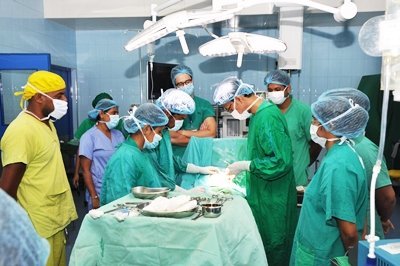 Emergency medicine is a young specialty in much of the world. In many of the countries where students do electives, the emergency department is staffed largely by rotating junior doctors, clinical officers and nurses rather than by career emergency physicians, and the department may have been formally designated as an emergency unit only in the last two decades.
The scale of what that costs is well quantified. The Disease Control Priorities project estimates that more than half of deaths and around a third of disability in low- and middle-income countries could be addressed by effective emergency care. That finding is why, in 2019, the World Health Assembly passed resolution WHA72.16, declaring emergency care systems for the acutely ill and injured essential to universal health coverage.
So you are not visiting a worse version of a UK emergency department. You are visiting a system that is actively being built, where the bottleneck is usually recognition and timing rather than knowledge.
The case mix: what actually comes through the door
Trauma, and a lot of it
Injuries and violence kill 4.4 million people a year worldwide, close to 8% of all deaths, and for people aged 5–29, three of the top five causes of death are injury-related. Road traffic crashes alone account for 1.19 million deaths a year, and 92% of them occur in low- and middle-income countries. The risk of dying in a crash is roughly three times higher in low-income countries than in high-income ones — despite those countries holding less than 1% of the world’s motor vehicles.
In practice this means motorcycle and pedestrian trauma, often in young men, often at night, often without helmets, and frequently with a delay between injury and arrival. If you have only seen UK major trauma, the volume is the first surprise and the mechanism spread is the second.
Undifferentiated fever and sepsis
Sepsis is the quiet giant of emergency medicine. The Global Burden of Disease analysis published in The Lancet estimated 48.9 million sepsis cases and 11 million sepsis-related deaths in 2017 — around one in five deaths worldwide — with roughly 85% of cases occurring in low- and middle-income countries. Malaria remains a major differential in much of Africa and parts of Asia: WHO estimated 282 million malaria cases and 610,000 deaths in 2024, with about 95% of both in the WHO African Region and children under five accounting for around 75% of malaria deaths there.
The clinical skill you will watch being used constantly is not an algorithm. It is pattern recognition in the absence of rapid imaging or a same-hour blood panel — deciding what to treat empirically while waiting for a test that may take a day, or may not be available at all.
Presentations you will rarely meet at home
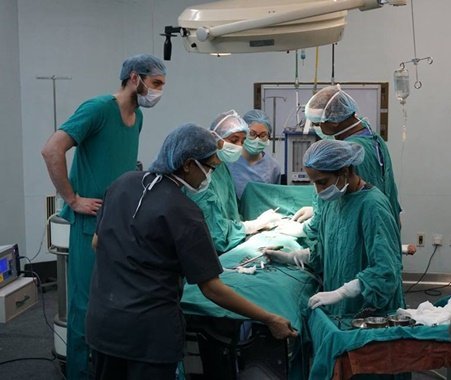 Snakebite envenoming is the clearest example. WHO estimates 5.4 million snakebites a year, of which 1.8–2.7 million result in envenoming, causing 81,410 to 137,880 deaths and around three times as many amputations and permanent disabilities. Depending on region and season you may also see advanced rheumatic heart disease, tetanus, organophosphate poisoning, late-presenting obstetric emergencies, and complications of conditions that would have been managed in UK primary care.
The arrival problem
Perhaps the single most important thing to understand before you walk in: many patients do not arrive by ambulance. Reviews of prehospital care in low- and middle-income countries repeatedly find that emergencies are transported by taxi, minibus or family car. In Kumasi, Ghana, half of trauma patients requiring admission arrived by commercial vehicle and only about 9% by ambulance; in Mumbai, only around 35% of trauma patients reached the main trauma centre by ambulance.
That changes everything downstream. There is no pre-alert, no handover, no en-route immobilisation or analgesia, and the clock has often been running for hours. Watch how the department compensates — that is the real lesson of the rotation.
Triage: the system you will actually be taught
UK students arrive expecting the Manchester Triage System. You will more often meet one of two tools designed for exactly this context.
The South African Triage Scale (SATS), developed in 2004 and used widely across Africa and by Médecins Sans Frontières, combines a physiological score (the Triage Early Warning Score, built from mobility, temperature, systolic blood pressure, heart rate, respiratory rate and neurological status) with a list of clinical discriminators, sorting patients into four colour-coded priority groups. A 2018 systematic review of adult triage tools used in low- and middle-income countries found SATS had the highest quality of evidence, with sensitivity of roughly 70–75% and specificity of 91–97%.
For children, WHO’s Emergency Triage Assessment and Treatment (ETAT) guidelines are the most widely implemented approach in resource-constrained settings. ETAT screens rapidly for airway and breathing problems, circulatory impairment or shock, coma or convulsions, and severe dehydration — built on the observation that many in-hospital child deaths occur within the first 24 hours of admission and are potentially preventable with immediate recognition.
Learning to apply a physiology-first triage tool without imaging is a transferable skill, and it is one of the most defensible things you can write about in your elective report.
Scope of practice: the line you must not cross
Emergency departments create the strongest pressure of any rotation to exceed your competence, because they are busy, because staff are generous, and because you may genuinely be the spare pair of hands. The rule does not change with the postcode.
The GMC’s Achieving good medical practice: guidance for medical students requires you to recognise the limits of your competence and to only treat patients or give medical advice under the supervision of a registered healthcare practitioner — and it explicitly extends to overseas placements and electives. The BMA has specifically flagged the pressure students face to work beyond their competence in resource-limited settings. Being invited to do something is not the same as being qualified, indemnified or insured to do it.
In practice, a well-run emergency elective is observation-appropriate with graduated, directly supervised participation in things you are already competent at. We set this out in detail on our scope of practice and how supervision works pages, and every Med Trips placement is arranged on that basis — a named supervisor, a defined department, and in-country teams who know the hospital and can intervene if the boundary is being tested. As a B Corp we are accountable for that in a way a booking site is not. It is also the model your medical school expects when it approves the placement; see our guide to getting your elective signed off.
What an emergency medicine elective looks like by region
| Region | What tends to dominate the case mix | Language in the department | Best suited to |
|---|---|---|---|
| Kenya & Tanzania | Road traffic and pedestrian trauma, malaria and undifferentiated fever, HIV/TB-related presentations, paediatric emergencies | Clinical notes and teaching in English; patient consultations frequently in Swahili | Students wanting high-volume trauma alongside a heavy infectious disease burden |
| Ghana | Trauma arriving by private and commercial vehicle, sepsis, sickle cell crises, obstetric emergencies | English is the official language of instruction and documentation; local languages with patients | Students who want an English-language department with minimal language friction |
| India, Nepal & Sri Lanka | Very high patient volume, poisoning and self-harm, trauma, cardiac and respiratory emergencies, snakebite in rural catchments | Documentation usually in English; histories in Hindi, Nepali, Sinhala or Tamil | Students prioritising sheer volume and breadth of acute presentations |
| Thailand, Vietnam & Cambodia | Motorcycle trauma, dengue and tropical infection, an increasing non-communicable disease load | Thai, Vietnamese or Khmer with patients; clinician English varies by hospital | Students wanting a transitional health system and a strong first-time-abroad support structure |
| Peru | Trauma, altitude-related presentations in highland sites, respiratory and infectious disease | Spanish is essential — working Spanish materially changes what you get out of it | Spanish speakers, or students willing to combine the placement with language study |
| Greece & Morocco | A case mix closer to European practice, with resource constraints and, in some sites, migrant and displaced-population health needs | Greek; Arabic and French in Morocco — clinician English is often good | Students who want an accessible, shorter-haul placement or a European comparison |
You can filter live availability by specialty, country and start date on our placement search, and see full costs on the prices page.
A realistic week
 Most emergency placements run a morning clinical shift, typically starting between 7am and 9am and finishing early afternoon, with the department handing over to the on-call team. Many hospitals will allow a supervised evening or weekend shift on request, and that is usually when the trauma volume is highest — ask, rather than assume, and never attend unsupervised.
Expect the first few days to feel slow while you learn the department’s geography, its documentation and who is actually in charge of a given bay. By the second week most students are following patients from triage through to disposition, presenting to their supervisor, and choosing one or two clinical themes to follow properly rather than trying to see everything.
Two to four weeks is the common range. Four weeks is meaningfully better than two for an emergency rotation, because the case mix is stochastic — a fortnight can simply miss the presentations you came for. Check your school’s minimum duration before you book.
Getting real academic value out of it
Write two or three specific learning objectives before you go, and make at least one of them about systems rather than pathology — triage accuracy, time from arrival to analgesia, or how the department decides who gets the one available monitored bed. These are observable, ethical to study, and far more distinctive in a portfolio than “I saw advanced disease”.
Keep a contemporaneous log, anonymised from the moment you write it, and never photograph patients or clinical records. Our guide to writing your elective reflective report includes a template mapped to GMC domains and the anonymisation rules in full, and we have written honestly about the ethics of going at all in are medical electives ethical?
Planning, paperwork and cover
Start 12–18 months ahead if you can. Vaccinations for several elective destinations need a course rather than a single dose, and some visas and hospital approvals are slow; our vaccinations, visas and pre-departure timeline sets out the sequence. Travel and medical insurance is included in the Med Trips programme fee, but professional indemnity remains yours to arrange — usually free as a student member of the MDU, MPS or MDDUS, but you must tell them where you are going and what you will be doing. Our insurance and indemnity guide covers the detail. Requirements change: always confirm current vaccination, visa, indemnity and school-approval details with the official source and your medical school before you travel.
If you are organising this for a group
Emergency medicine works well as a group rotation, because a cohort can be split across triage, resuscitation and the wards and then debrief together — which is a better learning structure than a single student shadowing one clinician. If you are a MedSoc committee member, a faculty lead or a university placements officer, our university group placements page sets out how group electives are built, the risk assessment and safeguarding documentation faculty will need, group sizes and invoicing. The practical steps are in our guide to organising a group elective.
Frequently asked questions
Can I do procedures on an emergency medicine elective abroad?
Only those you are already competent in, under the direct supervision of a registered practitioner, and with your medical school’s and supervisor’s agreement. GMC guidance on recognising the limits of your competence applies overseas exactly as it does in the UK. If you are offered something beyond that, declining is the correct professional answer.
Is an emergency medicine elective better than surgery for a career in EM?
For exposure to undifferentiated presentation, triage and resuscitation, yes. Many students combine the two — a fortnight in the emergency department and a fortnight in theatre — which also hedges against a quiet stretch. Compare with our surgical elective guide.
Do I need to speak the local language?
In most of our English-documenting destinations, no — but it changes what you get. Peru is the clearest case where working Spanish materially improves the placement. Elsewhere, learning twenty clinical phrases will still improve your rapport with patients.
How much does an emergency medicine elective cost?
Programme fees vary by country and duration, and flights, visa, vaccinations and spending money sit on top. We publish full fees on our prices page and a transparent line-by-line breakdown in how much a medical elective really costs.
Is emergency medicine available to nursing and allied health students?
Yes, on appropriate terms. We arrange supervised emergency and acute placements for nursing students, and related departmental placements in physiotherapy, midwifery, radiology, dentistry and pre-medicine. Scope is set by your own regulator and programme, not by the host hospital.
Next steps
If an emergency medicine rotation is what you want, browse supervised medical electives abroad and filter by country and start date on our search page. If you would rather talk it through — including which destination fits your specialty interest, your school’s requirements and your budget — get in touch with our team. You can read about how we work, and what being a B Corp commits us to, on our about us page. Faculty and society organisers should start with group medical electives for universities.
Sources: WHO fact sheets on injuries and violence, malaria and snakebite envenoming; WHO Global status report on road safety 2023; World Health Assembly resolution WHA72.16; Rudd et al., “Global, regional, and national sepsis incidence and mortality, 1990–2017”, The Lancet (2020); WHO Emergency Triage Assessment and Treatment (ETAT) guidelines; published validation studies of the South African Triage Scale; systematic reviews of prehospital care in low- and middle-income countries; GMC, Achieving good medical practice: guidance for medical students. Figures reflect the most recent published estimates at the time of writing — always check the primary source for current data.