 English ▾
 Nederlands
 English (US)
 Deutsch
 Italiano
 Português
 Español
Obstetrics is the one specialty where the gap between a high-income and a low-income health system can be measured in a single number. In 2023 an estimated 260,000 women died of pregnancy-related causes worldwide, roughly 712 a day, and about 70% of those deaths were in sub-Saharan Africa. In the UK, by comparison, MBRRACE-UK recorded 12.80 maternal deaths per 100,000 maternities in 2022–24. Almost everything you will notice on an obstetrics and gynaecology elective abroad, from the pace of the labour ward to the age of the women in the gynaecology clinic, sits somewhere inside that gap.
This is the fourth guide in our specialty series, after what to expect on a surgical elective abroad, emergency medicine and paediatrics. It covers the realistic case mix on an O&G unit in a low- or middle-income country, how the picture differs by destination, and the part that matters most in this specialty in particular: where a UK student’s scope of practice stops, and why consent rules travel with you.
Why O&G abroad is a different discipline, not just a busier one
Three things change when you move from a UK obstetric unit to one in Tanzania, Nepal or Ghana. The first is volume: birth rates are higher and hospitals serve larger catchments, so a district hospital may manage more deliveries in a month than many UK units manage in a quarter. The second is stage of presentation: women arrive later, often after labouring at home or in a lower-level facility, so the proportion of complicated cases is higher than the underlying population would predict. The third is what is available in the room: continuous electronic fetal monitoring, epidural analgesia, blood products on demand and a consultant obstetrician at 3am are not universal.
The WHO/UNICEF/UNFPA/World Bank maternal mortality estimates put the global maternal mortality ratio at 197 per 100,000 live births in 2023, down 40% since 2000. Progress is real, but the distribution is stark: a woman’s lifetime risk of maternal death is about 1 in 55 in sub-Saharan Africa and about 1 in 14,000 in Western Europe. Skilled health personnel attended 86% of births globally in 2023, but only 74% in sub-Saharan Africa. These are the structural facts behind every case you will see.
The case mix: what actually comes through the door
The labour ward
 Normal birth is still the majority of what happens, and you will see a great deal of it. What differs is the ratio of staff to women, the reliance on intermittent auscultation with a Pinard or handheld Doppler rather than continuous CTG, and the central role of the partogram as the tool that decides when labour has stopped progressing. Learning to read a partogram properly, and to recognise the point at which it should trigger action, is one of the most transferable skills an O&G elective abroad can give you.
Caesarean section rates tell you a lot about the unit you are in. Globally about 21% of births are by caesarean, and WHO projects this will reach around 29% by 2030. In England the figure was 42.4% in 2023–24 (23.7% emergency, 18.7% elective). In sub-Saharan Africa the average is closer to 5%, which reflects unmet need rather than restraint. But a tertiary referral hospital in a low-income country may have a caesarean rate far above its national average, because it receives the obstructed labours, the ruptured uteruses and the transfers that smaller facilities cannot manage. Ask on day one what the unit’s own rate is; the answer explains the case mix.
Obstetric emergencies you will see more often
- Postpartum haemorrhage. PPH kills around 70,000 women a year and accounts for more than 20% of maternal deaths globally, yet death from PPH has been almost eliminated in high-income countries. WHO launched its first PPH roadmap in 2023 for exactly this reason. Expect to see active management of the third stage, uterotonics, bimanual compression and, where available, tranexamic acid and balloon tamponade. Expect also to see what happens when blood is not available.
- Hypertensive disorders. Pre-eclampsia and eclampsia account for roughly 14% of maternal deaths worldwide. You will see eclamptic seizures managed with magnesium sulphate, and you will see women presenting for the first time with severe disease because antenatal blood pressure checks were missed.
- Sepsis. Pregnancy-related infection remains a leading direct cause of death in low-resource settings, and is also one of the three most common direct causes in the UK.
- Obstructed and prolonged labour. The downstream consequence is obstetric fistula: the UN estimates more than 500,000 women are living with it, with 50,000–100,000 new cases a year, at least 33,000 of them in sub-Saharan Africa. Fistula is virtually unknown in the UK. Seeing it, and understanding why it happens, is one of the most sobering lessons of the specialty.
- Complications of unsafe abortion and incomplete miscarriage, managed with manual vacuum aspiration or misoprostol, often as a large share of gynaecology admissions.
The gynaecology clinic and theatre
Cervical cancer dominates. There were about 660,000 new cases and 350,000 deaths in 2022, and roughly 90% of both occur in low- and middle-income countries. In many of the destinations Med Trips works in, screening is by visual inspection with acetic acid (VIA) rather than cytology or HPV testing, with same-visit thermal ablation or cryotherapy. You will see advanced disease in women in their forties that a UK screening programme would have caught as CIN a decade earlier. Alongside it: large fibroids, pelvic inflammatory disease, ectopic pregnancy, ovarian masses presenting late, and a heavy infertility caseload for which very little is on offer.
What you will see less of
Assisted conception, routine anomaly scanning at 18–20 weeks, minimal-access laparoscopic surgery as the default, epidural analgesia, continuous CTG in every room, and the multidisciplinary maternal medicine clinics that UK units run for cardiac, renal and diabetic pregnancies. Keep that in mind when you write up your placement: what you did not see is also a finding.
How the picture differs by destination
The single best proxy for what an O&G unit will look like is the country’s maternal mortality ratio. The 2023 figures below are the WHO-led inter-agency (MMEIG) estimates as published by the World Bank, per 100,000 live births. The UK’s MBRRACE figure uses a different denominator (maternities, not live births) and a broader ascertainment method, so treat comparisons as directional rather than exact.
| Destination | MMR 2023 (per 100,000 live births) | What it tends to mean on an O&G placement | Working language on the ward |
|---|---|---|---|
| Tanzania | 276 | High-volume labour wards, frequent PPH and eclampsia, low national caesarean access, fistula caseload | Swahili and English |
| Ghana | 234 | Busy regional hospitals, strong midwife-led model, late-presenting hypertensive disease | English |
| Kenya | 149 | Mixed public/private system; referral hospitals see concentrated complications | English and Swahili |
| Nepal | 142 | Geography drives delayed presentation; strong community birth-attendant programme | Nepali; English among doctors |
| Cambodia | 137 | Rapid recent improvement; provincial hospitals still resource-constrained | Khmer; some English |
| India | 80 | Enormous volume in public teaching hospitals; wide variation between states | Hindi and English |
| Morocco | 70 | Middle-income system; university hospital exposure in Rabat | Arabic and French |
| Peru | 51 | Urban tertiary care close to UK pattern; rural inequity remains | Spanish |
| Vietnam | 48 | Very high hospital birth rates; rising caesarean rates in cities | Vietnamese; limited English |
| Thailand | 34 | Universal coverage; case mix closer to Europe than to Africa | Thai; good English in teaching hospitals |
| Sri Lanka | 18 | Often cited as the model low-cost maternal health system; excellent teaching culture | Sinhala, Tamil; English widely used clinically |
| Greece | 5 | European standard of care; useful for comparison, not for tropical case mix | Greek; English in hospitals |
| United Kingdom (reference) | 8 (World Bank) / 12.80 per 100,000 maternities (MBRRACE-UK 2022–24) | Leading direct causes: thrombosis, suicide, sepsis; Black women nearly three times the mortality of White women | — |
Sri Lanka deserves a specific mention. It achieved an MMR in the teens on a fraction of the UK’s per-capita health spend, largely through a dense network of public health midwives and near-universal institutional delivery. A medical elective in Sri Lanka is therefore a good choice if you want to study how a system gets maternal mortality down, rather than only what happens when it has not.
Scope of practice: where the line sits in O&G
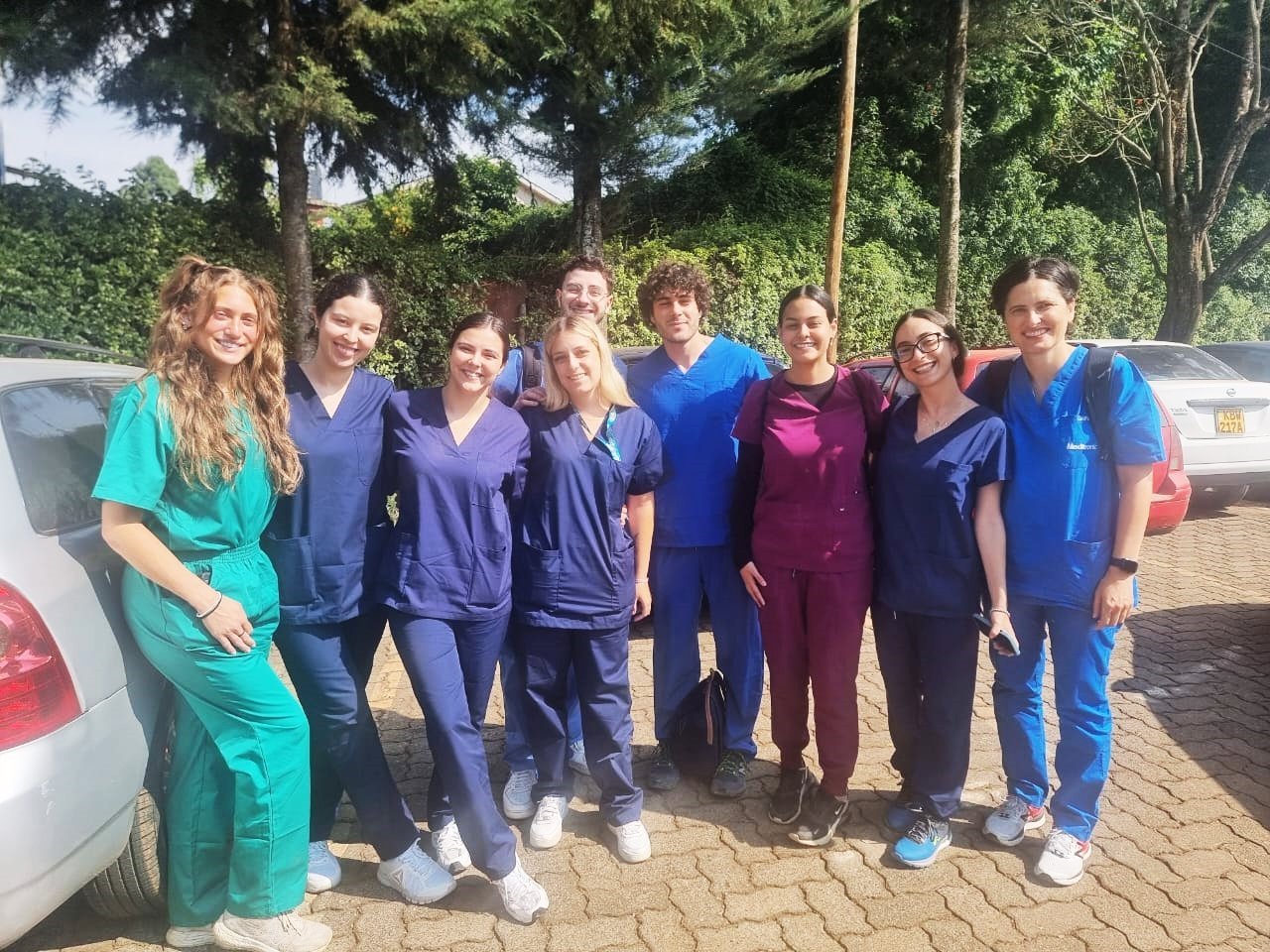
This is the specialty where the boundary matters most, because almost every examination is intimate and almost every patient is at her most vulnerable. Two sets of rules apply to you at the same time: the host hospital’s, and your own medical school’s, which in turn reflects GMC standards. When they differ, the stricter one wins, because it is your UK school that will judge your fitness to practise when you get home.
The GMC’s guidance on intimate examinations and chaperones, in force since 30 January 2024, sets the standard you should hold yourself to abroad even though it formally applies to registered practitioners: explain what you are going to do and why before you do it, obtain the patient’s permission, offer a chaperone and explain their role, stop if the patient asks or shows distress, and keep comments relevant to the examination. The GMC is explicit that an intimate examination must not be carried out or supervised on an anaesthetised patient for teaching purposes without written consent. UK medical schools’ guidance for students is, if anything, stricter: the patient must know you are a student and must have agreed to a student examining her specifically.
In practice, on an O&G elective abroad this means:
- Introduce yourself as a student, every time. A white coat and a stethoscope will get you mistaken for a doctor. Correct it.
- Consent is the woman’s, not the supervisor’s. A doctor saying “go ahead and examine her” is not consent from the patient. If you cannot communicate with her directly, ask a midwife or nurse to interpret and confirm she agrees to a student examining her. If the answer is no, or unclear, step back.
- Do not perform vaginal examinations or assist at deliveries beyond what your school has authorised and what you have been taught. Final-year students on an approved elective may be signed off to do so under direct supervision; earlier-year students generally are not. Your elective approval paperwork should state your permitted level.
- No unsupervised procedures, ever. Not a delivery, not a repair, not an examination under anaesthesia. Being invited to is not the same as being permitted to.
- No photographs of patients, including “anonymised” ones for your portfolio. Consent for clinical photography is a formal process in the UK and you cannot obtain it properly abroad.
- Your indemnity does not stretch to cover you acting outside your competence. See our guide to medical elective insurance and indemnity.
Med Trips places students in supervised, observation-appropriate roles with a named local supervisor, and our in-country teams brief every student on these boundaries before the first shift. That is not a limitation on your learning. Most of what an O&G elective teaches is learnt with your eyes, your ears and your hands on the abdomen, not on the perineum.
What you can genuinely get good at
- Abdominal palpation: fundal height, lie, presentation and engagement, assessed on dozens of women a week rather than a handful.
- Auscultation with a Pinard or handheld Doppler, and knowing when an intermittent finding should trigger escalation.
- Partogram interpretation and the WHO thresholds for action in prolonged labour.
- Recognising the sick obstetric patient: the woman who is quietly bleeding, the headache and epigastric pain that mean severe pre-eclampsia, the febrile post-partum patient.
- Observing active management of the third stage and the escalation ladder for PPH in a setting where it is used daily.
- Neonatal resuscitation at birth, observed alongside the midwives; read our paediatric elective guide for what happens next on the neonatal unit.
- Counselling and contraception, where language allows, in a population with very different unmet need.
- Systems thinking. The “three delays” model (delay in deciding to seek care, delay in reaching a facility, delay in receiving care once there) will explain most of the maternal deaths you hear discussed at morning meeting. It is worth reading before you go.
Preparing: what to read, and when to start
Start the approval and logistics process 12–18 months out; our vaccinations, visas and pre-departure timeline sets out the sequence. For O&G specifically, make sure your hepatitis B course is complete and documented, and know your hospital’s needlestick protocol before your first delivery, not after. Then read, in this order:
- Your own school’s elective learning objectives and permitted-activity statement.
- WHO recommendations on intrapartum care for a positive childbirth experience (2018) and the WHO Roadmap to Combat Postpartum Haemorrhage 2023–2030.
- The most recent MBRRACE-UK Saving Lives, Improving Mothers’ Care report, so you understand what still kills women in the UK and can compare.
- RCOG Green-top Guidelines on PPH, severe pre-eclampsia and sepsis: not because they will be followed to the letter abroad, but because you need a reference standard.
- The GMC’s Intimate examinations and chaperones and your school’s student version of it.
Rules on student involvement in intimate examinations, indemnity and elective approval change; always confirm current requirements with your medical school and the GMC before you travel.
The part nobody puts in the brochure
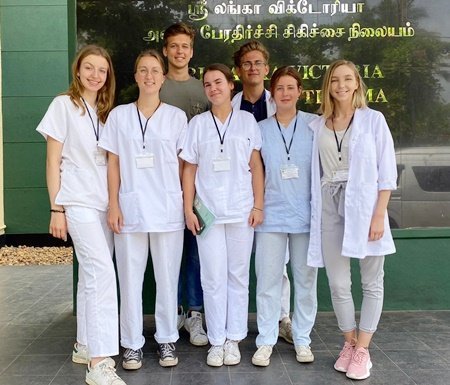
On an O&G elective abroad you are likely to witness a stillbirth, and you may witness a maternal death. UK students can go through an entire undergraduate obstetrics rotation without seeing either. Nobody is fully prepared for it, but you can prepare partly: know that it is likely, decide in advance who you will talk to that evening, and use the debrief your placement offers. Med Trips’ in-country teams are reachable 24/7 and are used to having exactly this conversation. Writing it down helps too; our guide to writing your elective reflective report includes a section on reflecting on death and distress without breaching confidentiality.
The other honest point: O&G is the specialty where the ethical questions about electives are sharpest, because the patients are women in labour who did not choose to have a foreign student in the room. Our guide on whether medical electives are ethical goes into this in depth. The short version is that observation with consent, under supervision, at a hospital that has a long-standing relationship with your provider, is defensible; anything else is not.
Organising an O&G elective for a group
Obstetrics is one of the most requested specialties for university group trips, particularly from midwifery cohorts and medical societies who want a shared, supervised block in a single hospital. If you are organising a group elective for your university or medical society, the three questions to settle early are whether the hospital can absorb your group size on the labour ward without diluting supervision, whether a midwifery-led or obstetrician-led placement suits your students, and what the faculty risk assessment requires around intimate examinations and supervision ratios. Our step-by-step guide to organising a group medical elective abroad and our safeguarding and risk assessment guide for faculty cover the process. Med Trips runs dedicated custom group placements in Sri Lanka, Thailand and Tanzania, each with a named coordinator and B Corp-level accountability for how the placement is run.
Frequently asked questions
Can midwifery students do an O&G elective abroad?
Yes, and they are among the students who get the most from it. The placement is structured differently, with more time on the labour ward and in antenatal clinic and less in gynaecology theatre. See our midwifery elective placements and the complete guide for UK student midwives, which covers NMC requirements for counting hours.
Will I be allowed to deliver a baby?
Only if your medical school has authorised it for your year of study, the woman has consented to a student being involved, and a qualified midwife or doctor is directly supervising. Many students on an approved final-year elective do assist at deliveries under those conditions. Earlier-year students should expect to observe. “Catching” a baby unsupervised because the ward is short-staffed is never acceptable, however it is framed.
Do I need a DBS check for an O&G placement?
Your UK medical school will already hold an enhanced DBS check for you. Host hospitals abroad rarely ask for it, but your school may require a copy on file as part of elective approval, and it is sensible to carry one. Always confirm with your elective office.
Which country is best for an O&G elective?
It depends on what you want to learn. For obstetric emergencies and high-volume labour wards, Tanzania, Ghana and Kenya. For studying a system that has driven maternal mortality down, Sri Lanka. For teaching-hospital scale, India. For a case mix closer to the UK with a different health system, Thailand or Greece. You can filter by specialty and destination on our placement search.
How long should an O&G elective be?
Four weeks is the practical minimum to see the full rhythm of a unit, including antenatal clinic, labour ward, postnatal ward and gynaecology theatre. Six to eight weeks is better if your school allows it. Most UK schools require a minimum of four weeks for the placement to count; check your own regulations and our pricing page for how duration affects cost.
Next steps
Browse medical electives abroad and nursing electives with obstetrics and gynaecology exposure, or use the placement search to filter by specialty, destination and dates. If you are unsure which unit fits your learning objectives, talk to our team; we will tell you plainly what you will and will not be able to do at each hospital. University staff and society organisers planning a cohort trip should start at our university group placements page. You can read more about how we work and our B Corp certification on our about page.