 English ▾
 Nederlands
 English (US)
 Deutsch
 Italiano
 Português
 Español
A midwifery elective abroad is one of the few chances in a UK midwifery programme to choose your own learning environment. It is also the part of the course students get the least concrete information about. Search for midwifery elective placements abroad and you will find plenty of pages telling you the experience will be life-changing, and almost none telling you what the Nursing and Midwifery Council actually requires, whether the time counts, or what you are and are not allowed to do once you get there.
This guide fills that gap. It sets out the NMC requirements your programme has to deliver, what an overseas elective can and cannot contribute to them, the supernumerary and scope-of-practice rules that govern your time on a labour ward abroad, what it costs, and how to get it approved. It is written for UK student midwives — and for the practice education staff who have to sign the form.
What a midwifery elective abroad actually is
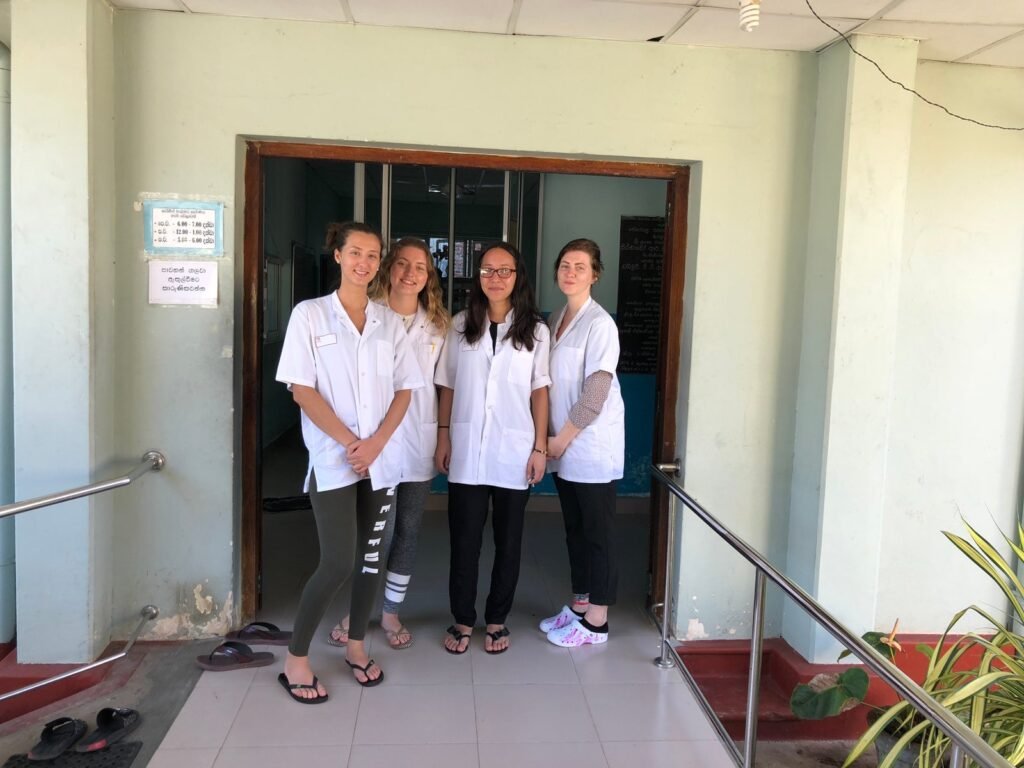
An elective is a placement you choose, usually in an area of interest outside the essential experience your programme must provide. Most UK midwifery programmes offer one in the second or third year, typically two to four weeks, and it is frequently optional and self-funded. Overseas midwifery placements are usually observational, with structured support where appropriate — you shadow local midwives across antenatal, labour and postnatal care rather than take a caseload.
That distinction is not a limitation providers apply to be cautious. It follows directly from the NMC framework, and understanding why makes the whole approval process easier.
The NMC numbers your programme must deliver
The NMC’s Standards for pre-registration midwifery programmes (originally published 18 November 2019; updated standards approved by Council on 25 January 2023 and published 25 April 2023) set out both programme length and specific minimum clinical experience. Knowing these numbers tells you immediately why an elective sits alongside your core practice rather than inside it.
| NMC requirement | The minimum |
|---|---|
| Programme length (full time) | Minimum three academic years, consisting of a minimum of 4,600 hours |
| Shortened route (already a registered adult nurse) | Minimum two years / 3,600 hours, or 18 months / 3,000 hours followed by a year of professional midwifery practice for EU recognition |
| Antenatal examinations | No fewer than 100 |
| Women in labour | Support and care for no fewer than 40 women in labour and facilitate the birth — reducible to 30 where births are not available, provided the student assists with caring for an additional 20 women giving birth |
| Breech births | Participation required; proficiency may be gained by simulated learning where no practice opportunity exists |
| Postnatal care | No fewer than 100 women postnatally and 100 healthy newborn infants |
| Complex care | No fewer than 40 women with additional care needs or complications, plus newborns needing additional or neonatal care |
| Student status | Students must be supernumerary |
Two things follow. First, these are substantial, countable requirements that your university has designed its placement circuit to deliver — they are not things a two-week trip abroad is expected to supply. Second, the supernumerary rule already applies at home: you are there to learn, not to fill a staffing gap. Overseas, that principle becomes the single most important line in your risk assessment.
Does an overseas elective count towards your practice hours?
The honest answer is: sometimes, partly, and only your university can tell you.
Any placement where proficiencies are met and programme hours are accrued must satisfy the NMC’s Standards framework for nursing and midwifery education and the Standards for student supervision and assessment — which means an appropriately prepared practice supervisor and practice assessor. The NMC acknowledges that elective placements may be international, or in settings where no NMC-registered professional is present. Where that is the case, the placement is generally additional to your required hours rather than counted within them.
What that means in practice:
- Establish before you book whether your programme treats the elective as an assessed, hours-bearing placement or as an additional experience. Universities differ, and some differ by cohort.
- If it is hours-bearing, your university will need to be satisfied about supervision and assessment arrangements — ask the provider for the named supervisor and the department, in writing.
- If it is additional, that is not a problem. It simply changes what you are documenting and what you can claim in a reflective account or a job application.
Ask your practice education lead this specific question early, and get the answer in writing. Requirements change — the NMC has been consulting on reforms to pre-registration education, including programme hours — so always confirm the current position with your university and the NMC rather than relying on what a previous cohort was told.
Scope of practice: the boundary that protects you
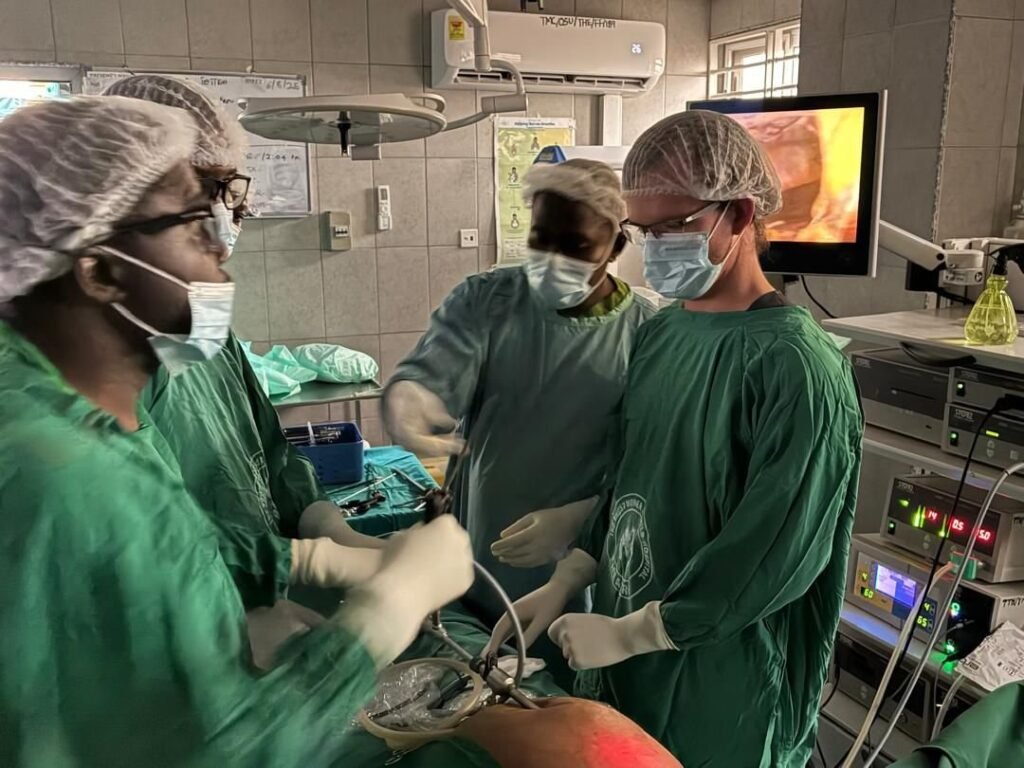
You are a UK student midwife abroad, not a locally qualified practitioner. Your scope of practice does not expand because the setting is under-resourced — if anything, the ethical obligation to stay within it gets stronger, because the safeguards that would stop you at home may not be present.
In concrete terms: observe and assist under supervision; do not perform procedures you would not perform at your own trust at your stage; do not accept an invitation to “just deliver this one” because staff are stretched. A responsible provider states this boundary to the host as well as to you, so nobody is negotiating it on a busy labour ward at 3am.
This is where the choice of provider does real work. Med Trips places students through in-country teams who know the hospitals and the midwives personally, and every midwifery elective placement is observation-led with structured support where appropriate, in a vetted hospital. As a B Corp, we are answerable for that standard to an external certification body, not only to our own marketing. Our guide to whether medical electives are ethical goes further into why this matters most in maternity care, where the temptation to over-involve a visiting student is highest.
Where UK student midwives go — and what you will see

Case mix is the real variable. Choose a destination for the clinical picture you want to understand, not the photographs.
- Tanzania and Kenya — high-volume regional and district maternity units; strong exposure to obstetric emergencies managed with limited resources, and to community and public-health maternity work.
- Ghana — busy teaching-hospital maternity services alongside district provision; English-speaking, which shortens the adjustment period considerably.
- Sri Lanka — a well-developed public maternal health system with strong outcomes; useful if you want to see a different model of universal maternity care rather than a low-resource one.
- Morocco and Peru — contrasting urban and rural provision; Peru in particular offers insight into intercultural birth practices and rural access challenges.
Placements typically run two to twelve weeks, with four weeks the most common choice, and start from around $499 depending on destination and duration. You can compare current options on our placement search and see full costs on the prices page.
If your whole cohort or MedSoc wants to travel together, that is a different process with its own approval requirements — see organising a group elective for your university, which covers group sizes, faculty involvement and the safeguarding documentation universities ask for.
What it costs, and how students fund it
Budget for the programme fee, flights, insurance, vaccinations, any visa, and personal spending. The fee itself is often the smaller half of the total once flights are added, so price the whole trip before committing.
Two points specific to midwifery students. First, most UK midwifery elective modules are unfunded, but many schools run competitive travel awards and there are subject-specific bursaries — our guide to elective bursaries and grants lists where to look and when to apply, and the deadlines are usually much earlier than students expect. Second, check exactly what insurance you have: Med Trips includes medical insurance within the programme fee, but personal indemnity and any professional cover remain your own arrangement. Our breakdown of elective insurance and indemnity explains the difference — and always confirm current terms with the insurer, since policies and exclusions change each year.
A realistic timeline
Work backwards from your elective module dates.
9–12 months out: confirm with your practice education lead whether the elective is hours-bearing, and what documentation they need. Shortlist destinations against the case mix you want. 6–9 months: book, and start any funding applications — travel award deadlines close early. 4–6 months: occupational health, vaccinations, visa route. 2–3 months: submit the university paperwork with the named hospital and supervisor; our guide to getting an elective signed off covers what approval panels look for. Final month: confirm arrival details, insurance documents and emergency contacts. On return: write your reflective account while it is fresh, and follow any post-return health screening your occupational health service advises.
Frequently asked questions
Will my overseas midwifery elective count towards my 4,600 programme hours?
Only if your university treats it as an assessed placement meeting NMC supervision and assessment standards. Many programmes treat international electives as additional experience instead. Ask your practice education lead in writing before you book.
Can I deliver babies on a midwifery elective abroad?
You should not exceed the scope of practice you hold at home, and overseas placements are normally observation-led with structured support where appropriate. If a provider implies you will independently conduct deliveries as a student, treat that as a warning sign rather than a selling point.
How long should a midwifery elective abroad be?
Four weeks is the most common length and is long enough to move past the orientation phase into genuine understanding of the unit. Two weeks is workable if your module is short; anything under two weeks rarely justifies the cost and the disruption to the host team.
Do I need to be in a specific year of my programme?
Most UK midwifery students go in year two or three, when they have enough clinical grounding to interpret what they are seeing. Your programme will specify the window, and it is usually tied to a named elective module.
Is a midwifery elective abroad worth it if the hours do not count?
Many students say yes — for understanding global maternal health inequality, for interview material, and for professional confidence. The Royal College of Nursing has identified knowledge expansion and cultural immersion among the benefits of overseas electives, and a 2025 Nursing Times guide by Guy Dominic Collins emphasises that the value depends heavily on preparation and on choosing the provider carefully. Go with clear objectives rather than vague ones.
Planning your midwifery elective
Start by confirming your programme’s rules, then choose the case mix you want to learn from. When you are ready, browse current midwifery placements abroad, compare them alongside our nursing electives, medical electives, physiotherapy placements and dentistry electives in our full placement search, or contact our team and we will send the supervision and hospital details your university needs to approve it.
This article is general guidance for UK student midwives and is not a substitute for your own university’s regulations. NMC standards, programme requirements and insurance terms change — always confirm current details with your practice education lead, the NMC and your insurer before booking.